
Top All-Rounder: Anodized Aluminum Alloy
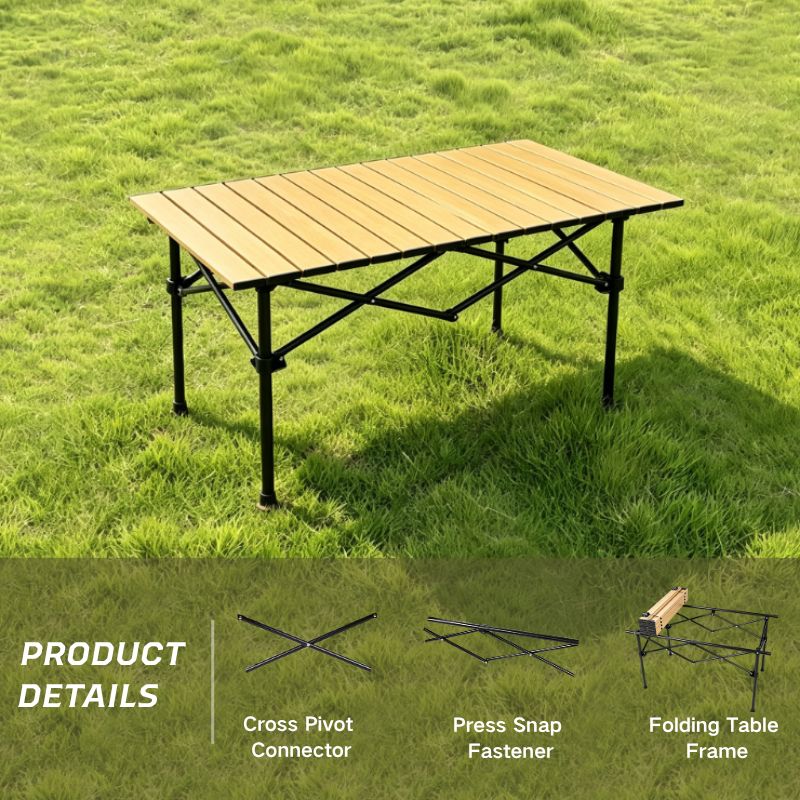
Key Advantages: Made from aerospace-grade 6061/6063 aluminum alloy; the anodizing process creates a dense surface oxide layer that is naturally UV-resistant, salt-spray resistant, and scratch-resistant. It retains over 97% of its gloss after six months of outdoor exposure-far outperforming standard steel.
Real-World Performance: A standard 120×60cm table weighs only 4.5–5kg and is easily carried with one hand. The thickened, reinforced rib design supports up to 120kg, comfortably accommodating a group of 4–6 people.
Maintenance:Easy to clean with a simple water rinse; no waxing or sun protection required. It only needs a drop of lubricant on the joints once a quarter, making it the lowest-maintenance option available.
Best For: Pragmatic campers who head out at least once a month and families who enjoy car camping; it handles diverse environments, including seaside locations, rainy seasons, and high-altitude areas with intense sun exposure.
Ultimate Lightweight Choice: Integrated Carbon Fiber Construction
Key Advantages: Constructed from custom carbon fiber tubing, the total weight stays under 2.5kg. When packed, it fits into the side pocket of a hiking backpack-representing the pinnacle of lightweight gear for hiking-based camping.
Real-World Performance:*Supports a load of approximately 60kg-sufficient for a solo camper to set up a stove and food supplies. It deploys rapidly, taking less than 10 seconds to set up.
Drawbacks:The tabletop lacks rigidity; placing heavy cast-iron cookware can cause localized sagging or denting. Prices are generally high.
Best For: Hardcore outdoor enthusiasts-such as hikers, cyclists, and mountaineers-who are extremely weight-conscious.