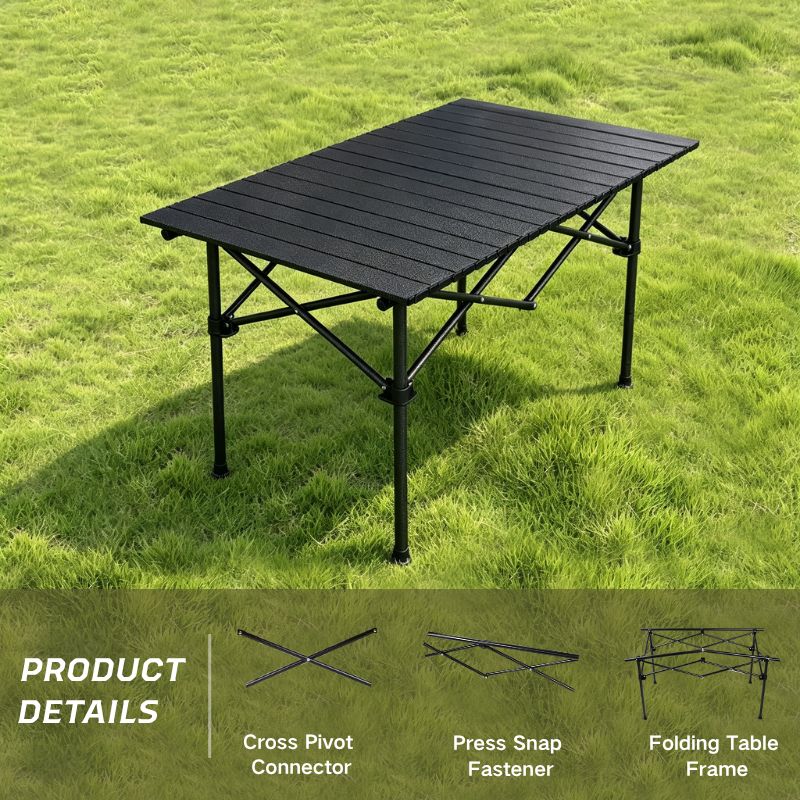

Core Processes for Metal Camping Tables
Aluminum Alloy Processing: High-strength aluminum tubes are precision-cut and bent, then welded into a stable frame. The frame undergoes multi-stage pretreatment-including pickling and chromating-to enhance surface adhesion. Finally, electrostatic powder coating or anodizing is applied to create a dense, wear-resistant oxide layer that withstands outdoor elements like rain and salt spray.
Magnesium Alloy Die-Casting: Molten magnesium alloy (650–750°C) is injected at high pressure into a specialized mold preheated to 180–280°C to form an integrated tabletop in a single step. This process balances lightweight design with structural strength, significantly reducing the need for subsequent assembly steps.
Steel Plate Stamping and Welding: Cold-rolled steel plates are stamped into shape, and the tabletop is secured to reinforcing ribs and connectors via welding. While this was the mainstream process for early, budget-friendly camping tables, it has drawbacks: the tables are relatively heavy, and weld points are prone to cracking due to stress concentration.
Core Processes for Wooden Camping Tables
Solid Wood Cutting and Sanding:Materials such as pine or oak are precision-cut to design specifications, and joints are finely sanded to remove burrs. Folding mechanisms are created by cutting slots to embed hinges, and the process concludes with the application of hard-wax oil or eco-friendly PU lacquer to provide moisture and oil resistance.
Eco-Board Assembly: Lightweight eco-boards are cut into tabletop segments and connected via concealed hinges to enable rapid (one-second) unfolding. Grooves are routed into the underside of the tabletop to embed reinforcing wooden strips, enhancing overall structural stability while balancing portability and cost-efficiency.